


Battery electrolyte is one of the least forgiving fluids in modern manufacturing. A typical lithium-ion electrolyte is lithium hexafluorophosphate (LiPF₆) dissolved in a blend of organic carbonate solvents — ethylene carbonate, dimethyl carbonate, ethyl methyl carbonate, diethyl carbonate. That mixture is flammable, volatile, and chemically aggressive. Worse, it is unforgiving about water: LiPF₆ stays stable in a dry, inert environment up to around 107 °C, but on contact with even trace moisture it decomposes to lithium fluoride and phosphorus pentafluoride, and the PF₅ then reacts with water to form hydrofluoric acid. Battery-grade electrolyte is specified at under 15 ppm water and under 50 ppm HF for a reason. A pump that leaks vapour out, lets moisture in, or sheds metal ions into the fluid does not just wear out — it can wreck the electrolyte and the cells made from it.
This is why electrolyte handling has converged on sealless pumps with fluoropolymer wetted parts. We have supplied magnetic-drive and canned-motor pumps into battery material plants and cell-production lines for over a decade. This guide covers how to select pumps for the main electrolyte-handling duties — bulk transfer, recirculation, precision cell filling, and solvent and additive dosing — with the moisture-control, leak-containment, and material compatibility requirements that make electrolyte service different from ordinary chemical transfer. It is a focused companion to our broader lithium battery manufacturing pump selection guide, which covers the whole production line from slurry to formation.
1. The Electrolyte-Handling Stations in a Battery Plant
Electrolyte moves through several distinct stations between the raw solvent tank and the sealed cell. Each has a different flow, accuracy, and containment requirement:
● Solvent and electrolyte bulk transfer — moving carbonate solvents and mixed electrolyte from drums, IBCs, and bulk tanks to day tanks and mixing vessels.
● Electrolyte mixing and recirculation — blending salt and solvents to the target formulation and circulating through filtration to hit purity targets.
● Precision cell filling — injecting a metered electrolyte dose into each cell, usually under vacuum, with tight volumetric accuracy.
● Additive and salt dosing — metering film-forming additives and concentrate into the mix at controlled ratios.
● Solvent recovery and waste handling — capturing volatile solvent vapour and moving spent or off-spec electrolyte to recovery or disposal.
Four constraints cut across all of them: zero leakage of flammable, toxic fluid; zero moisture ingress into a fluid that makes HF when it meets water; no metal-ion or particle contamination of a battery-grade liquid; and material compatibility with carbonate solvents that swell or dissolve the wrong polymers. These four points decide almost every pump choice on the line.
2. The Moisture Problem: Why Sealless Architecture Is Non-Negotiable
The single fact that drives electrolyte pump selection is the LiPF₆ reaction with water. In a dry, inert environment the salt is stable. Introduce moisture and it hydrolyzes — LiPF₆ breaks down to LiF and PF₅, and PF₅ reacts with water to release HF. HF is acutely toxic, corrodes equipment, and attacks the cell internally. So electrolyte is mixed, transferred, and filled in dry rooms or under inert gas, and every piece of equipment in the path has to keep moisture out and vapour in.
A mechanical-seal pump cannot do this. Its dynamic seal is a two-way path: flammable solvent vapour escapes outward, and atmospheric moisture works its way inward, especially as the seal wears. Neither is acceptable on electrolyte. Sealless pumps solve both at once:
● Magnetic-drive pumps. A magnetic coupling drives the impeller through a sealed containment shell, so there is no shaft penetration at all. The fluid sits behind static seals and the shell — no dynamic seal, no vapour leak path, no moisture ingress path. For the engineering detail, see our industrial magnetic drive pump selection guide.
● Canned-motor pumps. The rotor runs inside a sealed can, integrated with the wetted end, removing even the magnet-gap space of a mag-drive unit. For continuous solvent and electrolyte service this is the tightest containment option. The three structural approaches are compared in our canned motor pump technology guide.
In both cases the result is the same: a hermetic flow path. That is the baseline requirement for electrolyte, not an upgrade. The broader leak-containment logic is set out on our leak-proof pump solutions page.
3. Material Compatibility: Fluoropolymer Wetted Parts and FFKM Seals
Getting the containment right is half the job. The other half is the wetted material, and electrolyte is strict about it. Carbonate solvents swell or dissolve many common polymers, and metal surfaces both contaminate the fluid and corrode under any HF that forms. A practical compatibility map:
| Component | Correct choice | Avoid | Reason |
| Wetted housing / impeller | PFA or ETFE fluoropolymer lining | Stainless and most metals | Metal ions contaminate battery-grade fluid; HF attacks metal |
| Static seals / O-rings | FFKM (perfluoroelastomer) | Standard FKM / Viton | FKM swells in carbonate solvents and loses sealing integrity |
| Bearings | Silicon carbide | Carbon / metal in some grades | Chemically inert, abrasion resistant, dry-run tolerant |
| Containment shell | Fluoropolymer or ceramic-lined | Bare metal | Inert barrier with no leaching |
The FFKM point catches people out. A pump that is otherwise correct — sealless, fluoropolymer-lined — can still fail if its O-rings are standard FKM, because carbonate solvents swell FKM until the seal stops sealing. Perfluoroelastomer (FFKM) is the standard specification for carbonate-solvent service. It is worth confirming on the datasheet rather than assuming. Our AMC-F PTFE-lined magnetic drive pump is built around full fluoropolymer wetted parts and is the unit we most often configure for electrolyte and carbonate-solvent transfer. The wider material framework is on our corrosion-resistant pump solutions page.
4. Bulk Transfer and Recirculation
Bulk transfer moves carbonate solvents and mixed electrolyte from storage to day tanks and mixing vessels; recirculation blends and filters the electrolyte to purity. Both are continuous-duty jobs where efficiency and containment matter more than fine metering. Three points to specify:
● Continuous-duty efficiency. These pumps run for long stretches, so an electrically driven sealless pump is more economical than an air-driven one over the hours involved. A magnetic-drive or canned-motor pump fits the duty and keeps the flow path hermetic.
● Flammable-zone rating. Carbonate solvents are flammable, so transfer areas are classified zones. The pump motor needs the correct explosion-protection rating for the solvent gas group and temperature class.
● Low pulsation for stable filtration. Recirculation through fine filters works best with steady flow. Regenerative-turbine vortex hydraulics give low-pulsation output that suits filtration loops.
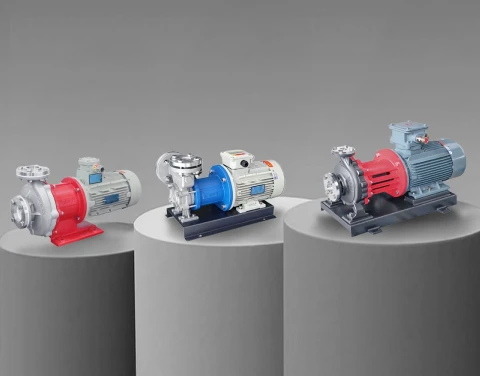
For bulk transfer and recirculation, the AMC-F PTFE-lined magnetic drive pump covers fluoropolymer-wetted electrolyte duty, and for continuous high-purity solvent service where even a static O-ring path is undesirable, the PWH/PWD/PWM canned vortex pump series gives the canned-motor alternative. For lower-aggression solvent staging within stainless compatibility, the MDW stainless steel vortex magnetic pump is a lower-cost option, though fluoropolymer is the safer default once LiPF₆ is in the fluid.
5. Precision Cell Filling: Metered Dosing Under Vacuum
Cell filling is the most accuracy-critical electrolyte duty. Each cell receives a precise electrolyte dose, usually injected under vacuum so the liquid wets the electrode stack and the separator fully without trapped gas. Under-fill starves the cell and cuts cycle life; over-fill wastes costly electrolyte and can cause leakage or venting. This is positive-displacement territory, where volume per stroke is repeatable regardless of back-pressure. Three requirements:
● Volumetric accuracy. Filling tolerances are tight — sub-millilitre doses held within roughly ±1% or better. Magnetic-drive gear pumps give the repeatable small-volume output this needs, with no seal to leak electrolyte.
● Vacuum compatibility. Filling under vacuum means the pump and lines see sub-atmospheric pressure on the cell side. The pump has to dose accurately across that pressure condition without losing prime or drawing in air.
● Low shear and no dead volume. Smooth internal geometry with minimal dead volume protects fill accuracy and makes change-over and purging cleaner between batches.
For metered cell filling and additive dosing, our MDC-M micro mini magnetic gear pump handles small-volume precise dosing, and the MDC-K magnetic gear pump covers higher-flow metered transfer. The magnetic-drive gear architecture gives the volumetric repeatability filling needs while keeping the flow path sealed. Background on the positive-displacement principle is in our positive displacement pump working principle and selection guide.
6. The Adjacent Duty: NMP and Electrode-Slurry Solvent Transfer
Electrolyte is not the only aggressive fluid in a cell plant. Upstream, electrode coating uses N-methyl-2-pyrrolidone (NMP) as the solvent that dissolves the PVDF binder in cathode slurry. NMP is harsh, the slurry it carries is viscous and abrasive, and the same containment logic applies. Plants often specify the electrolyte-side pump discipline for the NMP side too, so it is worth covering here:
● NMP transfer and recovery. NMP is recovered and recycled after the coating ovens drive it off, which is a continuous transfer duty on an aggressive solvent. Fluoropolymer-lined sealless pumps suit it for the same reasons they suit electrolyte — chemical inertness and a hermetic flow path.
● Cathode slurry handling. PVDF-in-NMP cathode slurry is viscous, abrasive, and shear-sensitive. It needs gentle, low-shear, low-pulsation transfer that preserves the slurry rheology and avoids particle segregation, with abrasion-resistant wetted parts. This is a different pump class from electrolyte transfer, and the viscosity framework is covered in our pumping high viscosity fluids selection guide.
The point for a plant buyer is that NMP and electrolyte share the sealless, fluoropolymer-lined requirement, so a consistent pump standard across both reduces spare-parts complexity. The full electrode-to-formation line is covered in our lithium battery manufacturing pump selection guide.
7. Operating Practice: Dry Rooms, Purging, and System Integration
Selecting the right pump is necessary but not sufficient. Electrolyte service has a few operating-practice points that decide whether a correctly specified pump actually performs:
● Dry-room and inert-gas integration. Mixing, transfer, and filling happen in dry rooms with very low dew point or under inert gas. The pump and its connections must not become a moisture entry point. Sealless construction helps, but fittings, gaskets, and any instrument ports also need to hold the dry boundary.
● Purging and change-over. Lines and pumps are purged with dry inert gas or compatible solvent between batches. Smooth internal geometry with minimal dead volume purges cleanly; complex internal cavities trap residual electrolyte that can hydrolyze and form HF later.
● Dry-run tolerance. During change-over and line clearing a pump may run briefly with little or no liquid. Silicon-carbide bearings tolerate short dry-running better than carbon or metal bearings, which protects the pump during these transitions.
● Grounding and static control. Carbonate solvents are flammable, so static control and proper grounding of pump and piping are part of the installation, alongside the explosion-protection rating on the motor.
These points sit at the system level, and clarifying them at the selection stage avoids the common pattern where a correctly chosen pump underperforms because the surrounding integration was not specified.
8. A Pump Selection Matrix for Electrolyte Handling
The table below condenses our typical recommendations across the electrolyte-handling stations. These are starting points; the actual electrolyte formulation, flow, and accuracy target always need validating against the real process:
| Station | Fluid | Key requirement | Recommended pump |
| Carbonate solvent bulk transfer | EC/DMC/EMC/DEC | Flammable zone, hermetic | AMC-F PTFE-lined magnetic drive |
| Mixed electrolyte transfer | LiPF₆ in carbonates | Zero moisture, zero leak | AMC-F PTFE-lined magnetic drive |
| Electrolyte recirculation / filtration | Mixed electrolyte | Low pulsation, continuous | AMC-F or PWH canned vortex |
| Continuous solvent recovery / VOC | Recovered solvent | Tightest containment | PWH/PWD/PWM canned vortex |
| Precision cell filling | Mixed electrolyte | Volumetric accuracy under vacuum | MDC-M micro magnetic gear |
| Additive / salt dosing | Additive concentrate | Metered, repeatable | MDC-M or MDC-K magnetic gear |
| Solvent staging (pre-salt) | Carbonate solvent | Lower-cost transfer | MDW 316L vortex (Ex motor) |
A single line uses several of these. Fluoropolymer-lined magnetic-drive pumps cover the bulk and transfer duties, canned-motor pumps take the tightest continuous-containment jobs, and magnetic gear pumps handle the metering and filling. All of them share the sealless, hermetic flow path that electrolyte demands.
9. Aulank Electrolyte Pump Portfolio
We have supplied sealless pumps into battery material producers and cell-manufacturing lines for 17+ years across China, South Korea, India, and Europe. The portfolio we typically recommend for electrolyte handling:
● AMC-F PTFE-lined magnetic drive pump — the core electrolyte and carbonate-solvent transfer unit, full fluoropolymer wetted parts, hermetic magnetic-drive containment, FFKM seal options for carbonate service.
● PWH/PWD/PWM canned vortex pump series — canned-motor variant for continuous solvent recovery and the tightest containment duties.
● MDC-M micro mini magnetic gear pump and MDC-K magnetic gear pump — precision cell filling, additive dosing, and metered transfer with volumetric repeatability and a sealed flow path.
● MDW stainless steel vortex magnetic pump — lower-cost 316L option for pre-salt solvent staging within stainless compatibility, with explosion-proof motor options.
What a battery material or cell producer gets from us specifically:
● Fluoropolymer wetted parts and FFKM seals as standard for carbonate-solvent and LiPF₆ electrolyte service, confirmed on the datasheet.
● Hermetic sealless construction across magnetic-drive and canned-motor families for zero vapour leak and zero moisture ingress.
● Explosion-proof motor options matched to carbonate-solvent gas group and temperature class for classified zones.
● Silicon-carbide bearings for chemical inertness and dry-run tolerance during change-over and purging.
● Documented quality control — ISO 9001, TÜV CE on magnetic drive vortex pumps, individual parameter test records, and 50+ patents on the synchronous permanent-magnet drive structure and shielded vortex hydraulics.
If you are sourcing pumps for an electrolyte mixing plant, a cell-filling line, or a battery material facility, send us your electrolyte formulation, flow, accuracy target, and zone classification, and we will return a recommended configuration with material specifications and quotes within two business days.
Get a Custom Electrolyte Pump Configuration
Whether you build cell-filling and electrolyte-mixing equipment as an OEM, operate a gigafactory cell line, or produce battery-grade electrolyte and solvents, our engineering team can match the right sealless magnetic-drive, canned-motor, or magnetic gear pump to each electrolyte-handling station in your process.
Talk to our team: Contact Aulank | WhatsApp: +86 13773157367 | Email: info@aulankpump.com
Browse the relevant product and solution pages:
● Positive Displacement Pump Series