



Leak Proof Pump Solutions for Hazardous & Volatile Fluids
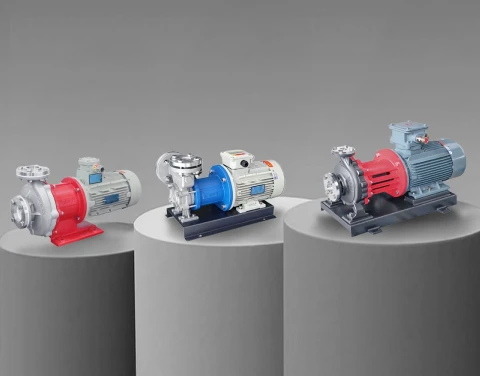
Aulank provides leak-proof pump solutions designed for the safe transfer of fluids where any leakage is unacceptable. Targeting strong acids, alkalis, toxic solvents, flammable/explosive liquids, and high-purity media, our solutions utilize sealless technology (Magnetic Drive or Canned Motor) to replace dynamic mechanical seals with static containment shells. This design completely eliminates the risks of fugitive emissions.

Key Features of Leak Proof Pumps
- Zero Leakage Design: By eliminating the drive shaft seal—the primary leak path in standard pumps—fluid is hermetically contained within the pump housing, ensuring 100% leak-free operation.
- Superior Safety: Specifically engineered to handle aggressive and dangerous chemicals, protecting operators from exposure and preventing environmental contamination fines or accidents.
- Low Maintenance Costs: With no mechanical seals to wear out or replace, and no complex seal support systems (flush plans) required, downtime and spare part costs are significantly reduced.
- Hermetic Isolation: The sealed design not only keeps fluid in but also keeps air and moisture out, making it ideal for fluids sensitive to oxidation or atmospheric moisture.
Typical Leak Proof Applications
- Chemical Industry: Transferring corrosive media like sulfuric acid, hydrochloric acid, and nitric acid, as well as organic solvents like benzene and toluene.
- New Energy & Battery: Handling lithium battery electrolytes, hydrogen fuel cell coolant circulation, and photovoltaic cutting fluids.
- Semiconductor Industry: Circulating Ultrapure Water (UPW) and electronic-grade chemicals (e.g., hydrofluoric acid) ensuring zero metallic ion contamination.
- Pharmaceuticals & Biotech: Sterile fluid transfer where process integrity must be maintained without risk of external biological contamination.
- Environmental Protection: Dosing systems in wastewater treatment handling hazardous neutralizing agents or flocculants.

Key Selection Considerations for Leak Proof Pumps
- Chemical Compatibility: Select pump body and containment shell materials (e.g., SS316L, Hastelloy, PTFE, PVDF) based on the aggressive nature of the fluid.
- Magnetic Loss & Heat Generation: Evaluate eddy current heat generation in metallic containment shells. Ensure the fluid does not vaporize due to temperature rise; consider non-metallic shells (PEEK/Ceramic) for volatile media.
- Dry Run Protection: Sealless pumps typically rely on the pumped medium to lubricate internal bearings. Ensure power monitoring or dry-run protectors are installed to prevent catastrophic failure.
- Solids Handling: Confirm the fluid is clean. Sealless pumps are sensitive to particles; if solids are present, filtration or specialized suspension-handling designs are required.
- System Pressure & Temperature: High temperatures can demagnetize standard magnets. Select high-temperature magnets (e.g., SmCo) and reinforced containment shells for high-pressure/temp conditions.
Common Issues in Leak Proof Pump Operation
- Dry Running: Bearings overheat and melt/shatter instantly without liquid lubrication.
- Decoupling: If motor torque is exceeded (e.g., due to high viscosity), the inner and outer magnets slip, stopping flow.
- Bearing Wear: Caused by abrasive particles in the fluid or operating off the Best Efficiency Point (BEP).
FAQs
Q1. Can leak proof pumps run dry?
Standard models strictly cannot run dry as bearings need liquid lubrication. However, they can be equipped with power monitors to shut down the pump immediately upon detecting dry run conditions.
Q2. What is the difference between a magnetic drive pump and a canned motor pump?
A magnetic drive pump uses magnets to transmit torque through a shell, while a canned motor pump integrates the motor and pump into a single sealed unit. Both are leak-proof, but canned pumps handle higher pressures and temperatures better.
Q3. Can these pumps handle solids?
Generally, no. The close tolerances of internal bearings make them sensitive to solids. If solids are present, inline filters or specialized slurry-compatible sealless pumps must be used.