


Concentrated Solar Power (CSP) plants, advanced thermal energy storage (TES) systems, and high-temperature industrial process heating rely extensively on molten salt mixtures—typically a binary blend of 60% sodium nitrate and 40% potassium nitrate—as both the heat transfer fluid (HTF) and thermal energy storage medium. Operating at continuous temperatures ranging from 290°C to over 560°C, molten salt systems impose extreme thermal and metallurgical demands on fluid handling equipment. The fundamental engineering challenge of molten salt is its freezing point: standard solar salt solidifies at approximately 220°C (428°F). If a pump experiences an unmanaged temperature drop during standby or maintenance, the salt inside the volute freezes into a rigid, rock-hard ceramic block. Furthermore, conventional centrifugal pumps equipped with dynamic mechanical seals fail rapidly due to thermal distortion, barrier fluid coking, and high-temperature oxidation. This engineering guide details the structural transition toward sealless fluid containment in high-temperature molten salt loops, examining how specific magnetic drive architectures, including the MDW and MDH series, prevent thermal freeze-up, withstand severe 500°C operating envelopes, and deliver reliable high-head circulation for concentrated solar energy infrastructure.
Thermal Freeze-Up Mechanics and Trace Heating Integration
The single most critical failure mode in molten salt fluid transfer is unmanaged solidification (freeze-up). Unlike organic thermal oils that become sluggish as they cool, molten nitrate salts transition directly from a low-viscosity liquid to a dense, rock-hard crystalline solid the moment their temperature drops below 220°C.
When a pump is integrated into a CSP loop, the entire volute, suction nozzle, and discharge flange must be engineered with continuous external trace heating—typically electrical resistance heating cables or high-pressure steam jackets. If power fails or insulation degrades, the molten salt within the pump casing freezes instantly. Attempting to restart an unheated pump containing solidified salt will shear impeller vanes, shatter internal ceramic bearings, and permanently destroy the drive assembly. Molten salt pumps require robust, jacketed casings designed to maintain uniform standby temperatures well above the crystallization threshold without cold spots.
The Thermal Destruction of Dynamic Mechanical Seals
Traditional centrifugal pumps deployed in high-temperature service rely on dynamic mechanical seals protected by complex cooling flushes and barrier fluid systems. In molten salt service, these dynamic seals encounter severe operational limitations.
Molten nitrate salts are strong oxidizers at elevated temperatures. When minor amounts of salt migrate across the mechanical seal faces toward the atmosphere, the cooler ambient temperatures cause the salt to crystallize instantly. These hard salt crystals wedge between the rotating and stationary seal faces (carbon against silicon carbide or tungsten carbide), acting as an aggressive lapping compound that rapidly scores and destroys the seal geometry. Simultaneously, auxiliary barrier fluid systems often fail due to thermal breakdown or coking, leading to uncontained leakage of corrosive, high-temperature salt into the plant environment.
The Sealless Magnetic Drive Solution for 500°C Service
The structural solution to high-temperature seal degradation is the complete elimination of the dynamic shaft penetration. Sealless magnetic drive architectures replace the physical drive shaft with a synchronized magnetic coupling separated by a stationary containment shell (isolation sleeve).
By establishing an absolute, hermetic static boundary, the magnetic drive pump prevents salt migration and eliminates the need for packed glands or auxiliary barrier fluid systems. However, adapting a magnetic drive pump for 500°C molten salt requires rigorous thermodynamic management. Standard Neodymium magnets lose their magnetic flux density above 150°C. High-temperature molten salt pumps must utilize Samarium-Cobalt (SmCo217) rare-earth magnets, which maintain robust magnetic coupling stability up to 400°C and beyond. Furthermore, the isolation sleeve—manufactured from high-nickel alloys like Hastelloy C-276—must be engineered with high electrical resistivity to minimize eddy current heating from the rotating magnetic field, preventing localized overheating of the salt.
Thermal Decoupling and Extended Bracket Engineering
While the wetted end of the pump operates in a 500°C molten salt environment, the external electric motor and its rolling-element bearings are typically limited to standard ambient temperatures (below 50°C). Bridging this massive 450-degree thermal gradient requires specialized structural design.
High-temperature magnetic drive pumps utilize an extended intermediate spacer bracket equipped with extensive cooling fins and thermal radiation barriers. This physical separation prevents conductive heat from migrating along the pump housing into the motor flange. In extreme CSP configurations, these intermediate brackets can also incorporate secondary cooling jackets circulated with ambient air or cooling water, ensuring the Samarium-Cobalt magnets and motor bearings remain safely within their rated thermal operational limits.
Tribology in Molten Salt: SSiC Journal Bearings
Inside the hermetic containment shell, the inner rotor assembly is fully submerged in the molten salt and is supported by internal journal bearings lubricated solely by the process fluid. Molten nitrate salts possess low kinematic viscosity and provide minimal natural lubricity compared to heavy synthetic oils.
Process engineers mandate Sintered Silicon Carbide (SSiC) for all internal wetted journal bearings and thrust washers. SSiC provides extreme mechanical hardness, absolute chemical inertness against molten nitrates, and an exceptionally low coefficient of friction. Its high thermal conductivity allows the bearings to rapidly dissipate frictional heat across the hydrodynamic film, preventing localized freezing or thermal shock within the precision bearing clearances.
Vortex Hydraulics for High-Head Salt Circulation
Concentrated Solar Power plants utilize extensive piping networks to circulate molten salt between the solar receiver tower, hot storage tanks, steam generators, and cold storage tanks. This sprawling infrastructure creates severe frictional head resistance.
To overcome high systemic backpressure without inducing the radial shaft deflection associated with off-design centrifugal operation, engineers specify the vortex pump architecture. A vortex (regenerative peripheral) impeller imparts kinetic energy continuously in a balanced, spiraling motion around the annular volute. This symmetric hydraulic design neutralizes radial thrust forces while delivering differential pressure up to ten times higher than a standard centrifugal impeller of equivalent size. This ensures stable, continuous salt circulation across sprawling CSP solar fields.
Conclusion
The extreme thermal envelopes and freezing behavior of molten salt demand uncompromising fluid transfer engineering. Relying on mechanically sealed pumps in 500°C solar salt loops invites rapid seal crystallization, thermal distortion, and catastrophic hazardous leaks. By transitioning to sealless magnetic drive architectures equipped with Samarium-Cobalt magnets, extended thermal decoupling brackets, SSiC bearings, and jacketed trace-heated volutes, CSP operators establish a robust, zero-leakage fluid boundary capable of enduring decades of severe thermal cycling.
Engineered Fluid Solutions with Aulank Pump
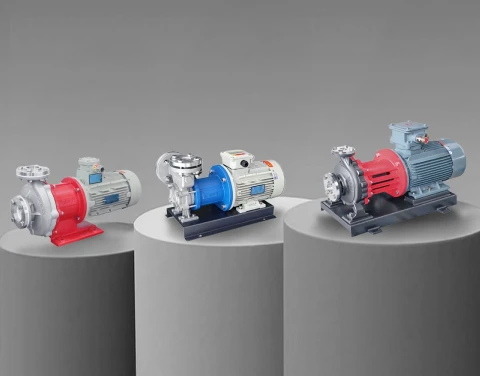
Aulank Pump designs specialized sealless fluid transfer equipment explicitly engineered for extreme temperature industrial processes and renewable energy infrastructure. Our high-performance magnetic drive pumps provide the absolute hermetic containment required to safely process corrosive, high-temperature heat transfer media like molten nitrate salts. By combining advanced SmCo magnetism with trace-heated jacketing and regenerative vortex hydraulics, as seen in our MDP Permanent-Magnet Canned Vortex Magnetic Drive Pump, Aulank delivers exceptional high-head stability and zero-leakage reliability under severe thermal stress. Consult our engineering team for precise thermal sizing, trace-heating integration, and system support for your Concentrated Solar Power facility.
