


The global expansion of Carbon Capture, Utilization, and Storage (CCUS) infrastructure and biogas upgrading facilities relies heavily on amine gas sweetening processes. At the core of these absorption systems is the continuous circulation of aqueous alkanolamine solutions—predominantly Monoethanolamine (MEA), Diethanolamine (DEA), or Methyldiethanolamine (MDEA)—designed to strip Carbon Dioxide (CO2) and highly toxic Hydrogen Sulfide (H2S) from raw syngas or flue gas streams. Fluid transfer within this closed-loop cycle, particularly pumping the "rich amine" (the solution heavily loaded with absorbed acid gases) from the bottom of the contactor column to the high-temperature regenerator, presents extreme fluid dynamic and environmental containment challenges. Rich amine is highly corrosive, prone to rapid thermodynamic outgassing, and laden with lethal H2S. Traditional mechanically sealed centrifugal pumps consistently fail in this aggressive environment. Dynamic seals leak deadly toxic gases into the facility, while the inherent flashing of the rich amine causes chronic vapor lock and mechanical destruction. This engineering guide details the structural necessity of sealless fluid containment in amine sweetening systems, examining how specialized magnetic drive architectures eliminate fugitive emissions, process severe two-phase outgassing, and deliver the unyielding reliability required for critical carbon capture infrastructure.
Thermodynamic Outgassing and Centrifugal Vapor Lock
The primary hydraulic obstacle in pumping rich amine is the instability of the dissolved acid gases. As the rich amine exits the high-pressure contactor and enters the suction piping of the transfer pump, it often experiences minor frictional pressure drops. According to Henry’s Law, as the localized pressure decreases, the solubility of the dissolved CO2 and H2S plummets.
When the fluid accelerates into the eye of a standard centrifugal impeller, the localized pressure drops further. This triggers immediate outgassing, causing the dissolved acid gases to flash into vapor bubbles. Because centrifugal pumps separate fluids based on density, the heavier liquid amine is forced to the outer volute perimeter, while the lighter CO2 and H2S gases become trapped at the low-pressure center of the impeller. When this entrained gas volume exceeds approximately 3% to 5%, the vapor pocket displaces the liquid entirely. The pump loses prime and spins in a dry pocket of gas—a condition known as vapor lock (or gas binding). Fluid circulation to the regenerator ceases completely, halting the entire carbon capture process and causing the pump’s internal bearings to overheat rapidly from fluid starvation.
Vortex Hydraulics for Two-Phase Flow Processing
To resolve the persistent threat of outgassing and vapor lock in rich amine transfer, process engineers specify the vortex pump architecture. A vortex (regenerative peripheral) pump operates on a fundamentally different fluid dynamic mechanism than a standard centrifugal unit.
The impeller features dozens of radial vanes rotating within a symmetrical annular channel. This geometry continuously transfers kinetic energy to the fluid, creating an intense, high-velocity spiraling motion. Rather than allowing the flashed CO2 and H2S bubbles to coalesce at a central suction eye, this violent internal turbulence aggressively chops and compresses the entrained gas, keeping it fully suspended and homogenized within the liquid amine phase. The pump forcibly sweeps this two-phase mixture out through the discharge port. This specialized hydraulic mechanism enables the vortex magnetic drive pump to continuously process up to 20% entrained gas by volume without losing prime, guaranteeing uninterrupted rich amine flow to the regenerator column even during severe pressure transients.
Dynamic Seal Failure and Lethal H2S Emissions
While outgassing disrupts centrifugal hydraulics, it actively destroys dynamic mechanical seals. Mechanical seals maintain separation between the high-pressure amine and the atmosphere by utilizing a microscopic liquid film between a rotating and a stationary lapped face.
When pumping rich amine loaded with H2S, this microscopic fluid film inevitably migrates to the atmospheric edge of the seal. As the pressure drops to atmospheric levels, the dissolved H2S instantly flashes into gas, stripping the seal of its hydrodynamic lubrication. The resulting dry friction generates intense heat, causing the carbon and silicon carbide faces to suffer thermal shock, score, and shatter.
The failure of an amine pump seal is a critical safety hazard. Hydrogen Sulfide (H2S) is extremely toxic; regulatory bodies such as OSHA enforce Permissible Exposure Limits (PEL) of merely 10 to 20 parts per million (ppm). A blown mechanical seal releases lethal concentrations of H2S gas into the facility, triggering immediate plant evacuations, severe regulatory penalties, and posing a fatal risk to plant operators.
Establishing the Hermetic Magnetic Drive Boundary
The definitive structural solution to lethal fugitive emissions is the absolute elimination of the dynamic shaft penetration. Sealless magnetic drive architectures replace the physical drive shaft with a synchronized magnetic coupling separated by a stationary containment shell (isolation sleeve).
Constructed from heavy-walled 316L stainless steel or Hastelloy, this isolation sleeve establishes a permanent, static pressure boundary between the highly toxic rich amine and the external environment. Because there are no dynamic seals or packing glands intersecting the fluid envelope, there is zero pathway for H2S gas or volatile organic compounds (VOCs) to escape. The hazardous fluid remains completely isolated within the pump casing. This structural evolution guarantees absolute zero-leakage continuous operation, ensuring strict environmental compliance and safeguarding operator life in sour gas processing facilities.
Tribology: Resisting Iron Sulfide (FeS) Abrasion
In gas sweetening processes, the interaction between H2S and carbon steel piping generates microscopic Iron Sulfide (FeS) particulates, commonly referred to as "black powder." These particulates remain suspended in the circulating amine stream. In a sealless magnetic drive pump, the inner rotor assembly is fully submerged and must be supported by internal journal bearings lubricated by the process fluid.
If standard carbon-graphite bearings are utilized, the abrasive Iron Sulfide particulates will rapidly embed into the soft carbon matrix, acting as a grinding paste that destroys the bearing tolerances and leads to rotor seizure. Process engineers mandate Sintered Silicon Carbide (SSiC) for all internal wetted bearings and thrust washers in amine service. SSiC provides extreme mechanical hardness (ranking just below diamond), making it entirely impervious to abrasive scoring from FeS particulates. Its superior tribological properties allow it to establish a stable hydrodynamic fluid film in hot, low-viscosity amine, ensuring tens of thousands of hours of continuous, wear-free operation without bearing degradation.
Metallurgical Purity and Heat-Stable Salts (HSS)
As amine solutions undergo continuous thermal cycling between the absorber and the high-temperature regenerator, a portion of the amine degrades, reacting with oxygen and trace acids to form Heat-Stable Salts (HSS). High concentrations of HSS drastically lower the pH of the amine solution, rendering it aggressively corrosive to standard carbon steel and lower-grade alloys.
To combat this severe corrosive environment, magnetic drive pumps deployed in carbon capture loops are constructed entirely from high-grade austenitic stainless steels, predominantly 316L. The "L" (low carbon) designation prevents carbide precipitation at the weld seams, eliminating the risk of intergranular corrosion. Following precision machining, the thick-walled volutes and containment shells undergo rigorous chemical passivation, creating a highly stable chromium oxide layer that resists the corrosive attack of degraded amines, ensuring the long-term structural integrity of the high-pressure fluid boundary.
Conclusion
The severe toxicity, rapid outgassing, and corrosive degradation associated with amine gas sweetening expose the fundamental limitations of mechanically sealed centrifugal pumps. Operating with H2S-loaded rich amine guarantees rapid seal flashing, lethal gas emissions, and chronic vapor lock. By transitioning to sealless magnetic drive architectures equipped with heavy-walled 316L containment shells, abrasive-resistant SSiC bearings, and regenerative vortex hydraulics, CCUS operators establish an indestructible, zero-leakage fluid boundary. This structural integration ensures continuous two-phase gas-liquid processing, absolutely prevents fugitive H2S emissions, and maximizes the operational uptime of critical carbon capture infrastructure.
Engineered Fluid Solutions with Aulank Pump
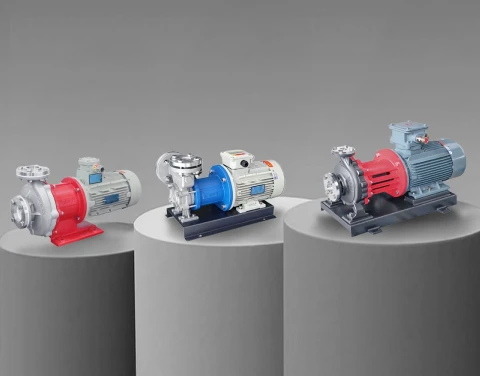
Aulank Pump designs specialized sealless fluid transfer equipment explicitly engineered for the rigorous demands of environmental processing, biogas upgrading, and Carbon Capture, Utilization, and Storage (CCUS) facilities. Our high-performance magnetic drive pumps provide the absolute hermetic containment required to safely process highly toxic, corrosive, and volatile fluids like rich amine loaded with H2S. By combining heavy-walled passivated metallurgy with advanced regenerative vortex hydraulics, as seen in our MDP Permanent-Magnet Canned Vortex Magnetic Drive Pump, Aulank delivers exceptional gas-handling capabilities and zero-leakage reliability under severe systemic stress. Consult our engineering team for precise two-phase flow analysis, metallurgical validation, and system integration support for your advanced gas sweetening facility.
