



Every pump that moves a liquid has to stop that liquid from escaping where the shaft enters the casing. Two designs solve that problem in opposite ways. A mechanical seal pump uses a pair of precision faces around the rotating shaft. A magnetic drive pump removes the shaft penetration altogether and turns the impeller through a sealed magnetic coupling. That single choice decides how the pump can leak, how often it needs attention, what it costs to own, and whether it survives your fluid at all. At Aulank we build both, so the same question lands on almost every project: seal or sealless? This guide covers how each design works, the duties each one owns, the limits buyers tend to find out about late, and a simple way to make the call.
How Each Design Contains the Fluid
The difference is mechanical, and it lives at the shaft.
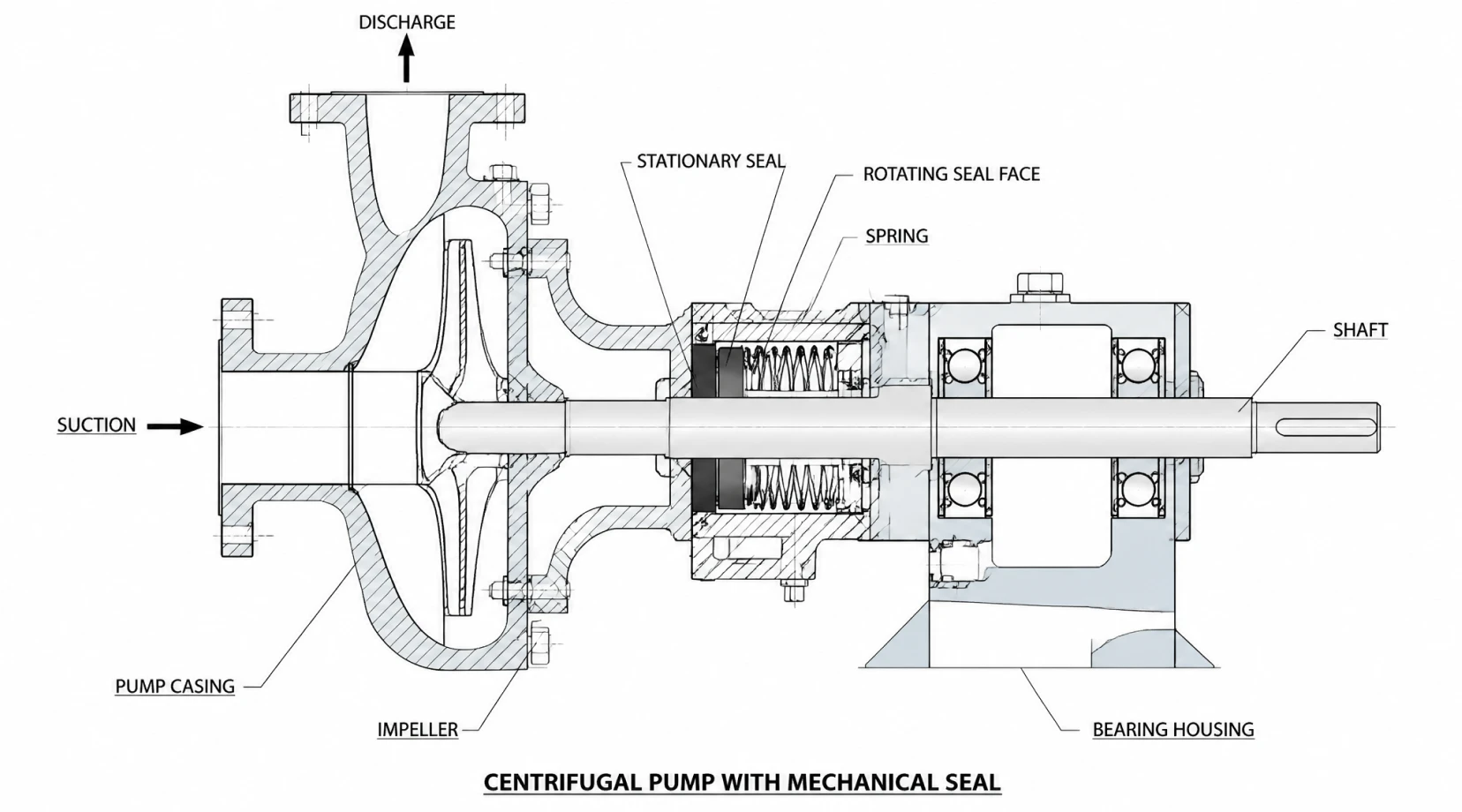
● Mechanical seal pump. The motor turns a shaft that runs straight through the pump casing. Sealing happens at two flat faces — one fixed to the casing, one rotating with the shaft — held together by springs and pressed by system pressure. A thin film of the pumped liquid lubricates and cools those faces. The seal is a wear part: it runs for years in clean, cool service, and it fails fast when the fluid is abrasive, runs hot, or the pump is pushed off its curve. Where leakage cannot be tolerated, the design steps up to a dual (double) seal with a barrier or buffer fluid system, which adds a reservoir, plumbing, and monitoring.
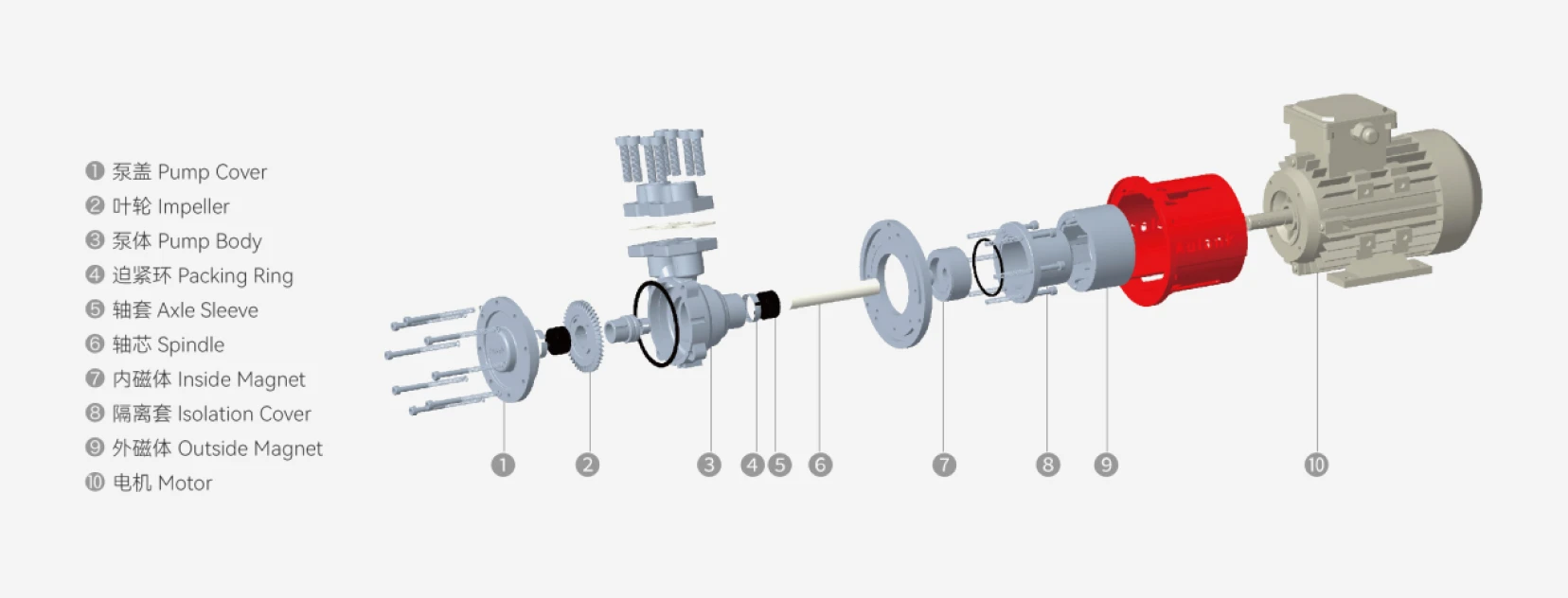
● Magnetic drive (sealless) pump. There is no shaft penetration. The motor spins an outer ring of magnets; inside a sealed containment shell, an inner magnet assembly carries the impeller and follows the outer ring through the shell wall. The fluid never meets a dynamic seal or a route to atmosphere, because the containment shell is a solid, static barrier. The internal sleeve bearings, usually silicon carbide, are lubricated and cooled by the process liquid itself. A canned motor pump takes the idea one step further and seals the motor rotor inside the fluid chamber. Both are sealless, and both lean on the fluid to cool their internals.
A wearing seal face versus a static containment shell — that one decision drives everything below it.
Where Magnetic Drive (Sealless) Is the Right Call
Choose a sealless magnetic-drive pump when a leak is unacceptable, whether that comes from the fluid, the regulation, or the cost of losing product.
● Hazardous or toxic fluids. With acids, solvents, and flammable media, a weeping seal is a health, fire, or environmental incident. Removing the seal removes the leak path.
● Fluids that react with air or moisture. Electrolyte that forms hydrofluoric acid on contact with moisture, or products that oxidise in air, stay isolated behind the containment shell.
● High-value or ultra-pure liquids. Lost solvent is a direct cost, and any ingress is contamination. A sealless pump keeps the fluid contained and clean.
● Emissions and safety compliance. Plants under fugitive-emission or leak rules cut emissions at the source by deleting the shaft seal.
● Long, quiet run times. There is no seal to watch or replace. A well-selected mag-drive unit runs for years with little more than motor-bearing care, which lowers lifetime cost even at a higher purchase price.
For corrosive chemical duty we build PTFE-lined magnetic-drive chemical pumps and stainless magnetic-drive vortex pumps for high-head, low-flow circulation.
Where a Mechanical Seal Is Still the Better Choice
A mechanical seal pump is the stronger engineering choice when the fluid or the operating window would wreck a sealless pump's internals.
● Solids, slurries, and abrasives. Hard particles grind the tight running clearances and silicon-carbide bearings of a sealless pump. An open-impeller mechanical-seal pump tolerates dirty fluid; a sealless unit only handles solids with an external flush, and it still wears.
● High viscosity and shear-sensitive fluids. Thick media raise the torque the magnetic coupling has to transmit and can make it slip. A sealed shaft transmits torque directly.
● Temperatures past the magnet's limit. Standard rare-earth magnets lose strength as they heat and demagnetise beyond roughly 120–150 °C unless high-temperature grades and thermal barriers are used. Hot-oil and high-temperature duty often stays with mechanical seals, or moves to a sealless design engineered for heat.
● Pressures and flows outside the sealless envelope. Very high pressure or large flow can exceed what a containment shell and coupling are rated for, where a strong sealed shaft copes.
● Dry-run and run-dry risk. If the pump can lose suction, a mechanical-seal pump survives better. A mag-drive pump can be destroyed in seconds without liquid to cool its bearings.
● Clean, benign, cost-sensitive service. For cool water, coolant, or non-hazardous transfer, a mechanical seal is simpler and cheaper, and its maintenance is routine.
On this side of the line we supply mechanical-seal centrifugal pumps for high flow, hot-oil circulation pumps for thermal systems, and positive-displacement pumps for high-viscosity and metering duty.
The Limits Buyers Underestimate
Both designs have failure modes that never appear on a catalogue data sheet. Knowing them prevents a bad selection.
Magnetic drive (sealless)
● Dry running is fatal, and fast. The process liquid cools the bearings, so without it they overheat and seize, often in well under a minute. Specify dry-run protection or reliable low-level control.
● Decoupling under overload. If load torque exceeds the coupling's magnetic torque — a blocked line, a dead-headed pump, a sudden rise in viscosity — the magnets slip, the motor keeps spinning, and flow stops. A power monitor catches it early.
● Efficiency and eddy currents. A metallic containment shell sitting in a moving magnetic field generates eddy currents, which waste power as heat and warm the fluid. Efficiency typically runs a few percent below an equivalent sealed pump, often quoted around 3–8%. Non-metallic or ceramic (silicon-carbide) shells remove eddy losses, and shell material is a real selection variable for aggressive acids.
● Solids and ferrous debris. Even a small solids fraction wears the bearings, and magnetic particles are worse because they collect in the magnet gap. An inlet strainer is standard.
● Static seals still exist. The containment shell removes the dynamic seal, but O-rings and gaskets remain and can weep if the wrong elastomer is fitted.
Mechanical seal
● The seal is a consumable. Faces wear, especially with abrasives, high shaft speed, or poor lubrication, and a worn seal leaks. Plan for inspection and replacement.
● Barrier systems add cost. Dual seals for hazardous fluids need a barrier or buffer fluid and a support system, which raise both capital and maintenance.
● Off-BEP operation shortens life. Running far from the best-efficiency point raises vibration and face wear. Chemical incompatibility of the elastomer or face material is the other common killer.
Mechanical Seal vs Magnetic Drive, Side by Side
The short version, factor by factor:
| Factor | Mechanical seal pump | Magnetic drive (sealless) pump |
| Leakage path | Dynamic seal at the shaft; wears and can weep | No dynamic seal; hermetic containment shell |
| Best-fit fluids | Solids, slurries, high-viscosity, benign clean liquids | Toxic, corrosive, flammable, high-value, ultra-pure liquids |
| Solids handling | Good, especially with an open impeller | Poor; needs a flush and still wears |
| Temperature | High, with the right seal (bellows for heat) | Limited by magnet grade unless engineered for heat |
| Pressure / flow | Wide envelope, including very high | Bounded by shell and coupling rating |
| Dry-run tolerance | Better | Very poor; seizes in seconds |
| Upfront cost | Lower (single seal) | Higher |
| Maintenance / TCO | Seal replacement; higher over life in hard service | Low; often years untouched |
| Efficiency | Baseline | Slightly lower with a metallic shell (eddy losses) |
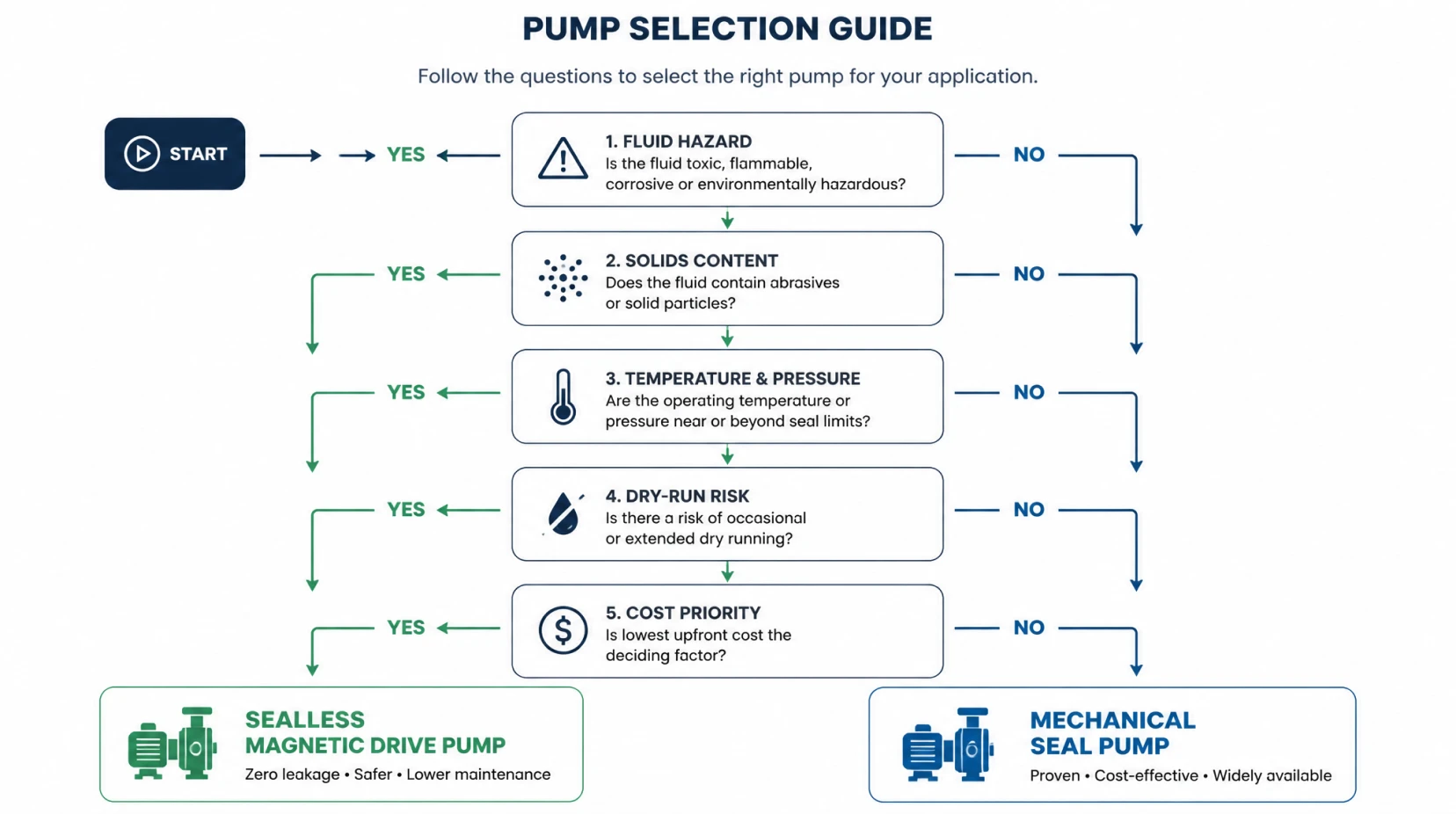
How to Decide: A Short Selection Path
Work through the fluid and the duty in order:
1. Is the fluid hazardous? Toxic, flammable, corrosive, moisture-reactive, high-value, or under leak regulation — if yes, start with a sealless magnetic-drive pump.
2. Does it carry solids or run thick? Solids, slurry, or high viscosity usually point to a mechanical-seal pump; a sealless unit needs a flush and will wear.
3. Is it beyond a standard coupling? Temperature, pressure, or flow outside the sealless envelope means a mechanical seal, or a sealless pump engineered for that window.
4. Can it lose its liquid? If the pump can run dry during upsets and you cannot add dry-run protection, favour a mechanical seal.
5. Is it clean, cool, and cheap to serve? For benign fluid with tight capital limits, a mechanical seal is the simpler, lower-cost answer.
Then weigh total cost of ownership, spare-parts commonality, and compliance alongside the purchase price. Most plants end up running both, matched duty by duty. The target is the design that runs reliably, meets your safety and emissions rules, and costs the least to keep running over its life.
Match the Pump to Your Duty with Aulank
Aulank builds sealless and mechanical-seal pumps in one range, so the recommendation follows your fluid rather than our catalogue. Our sealless magnetic-drive and canned pumps take on toxic, corrosive, and high-purity duty; our mechanical-seal vortex and centrifugal pumps handle solids, high flow, and hot service. Because we engineer for extreme temperatures, with continuous operation from −196 °C to +400 °C, the temperature ceiling that limits many sealless pumps is something we design around instead of a hard stop. Send us your fluid, temperature, pressure, flow, and duty cycle, and our engineers will match the design and materials to the job. See the full industrial pump range or contact Aulank to talk through a selection.